Stop Wasps Nesting on Your Property
Small, practical things you can do around a home or business to make a wasp nest less likely.
Open 8am – 9pm, 7 days a week. Send a photo of the nest on WhatsApp for the fastest response.
Seal small gaps early in the year
Check soffits, fascias and air bricks in spring. A few millimetres is all a queen needs to start a nest.
Keep bin lids closed
Open bins are a major food source from July onwards. A tight lid alone makes a noticeable difference.
Rinse recycling
Sugary residue on cans and bottles attracts wasps. A quick rinse reduces activity around the bin store.
Cover food and drinks outside
Especially sweet drinks, jam, fruit and meat in the garden or at a pub bench.
Check sheds and outbuildings in May and June
Small early nests the size of a golf ball are easy and cheap to treat — much easier than a football-sized nest in August.
Don't swat near the nest
Crushed wasps release an alarm pheromone that triggers others to attack. Walk away calmly if you stumble on a nest.
Trim back vegetation away from walls
Dense shrubs against soffits make it easier for wasps to enter unnoticed.
Check chimney pots and unused flues
An old uncapped chimney is one of the most common indoor nest locations.
A note on DIY treatments
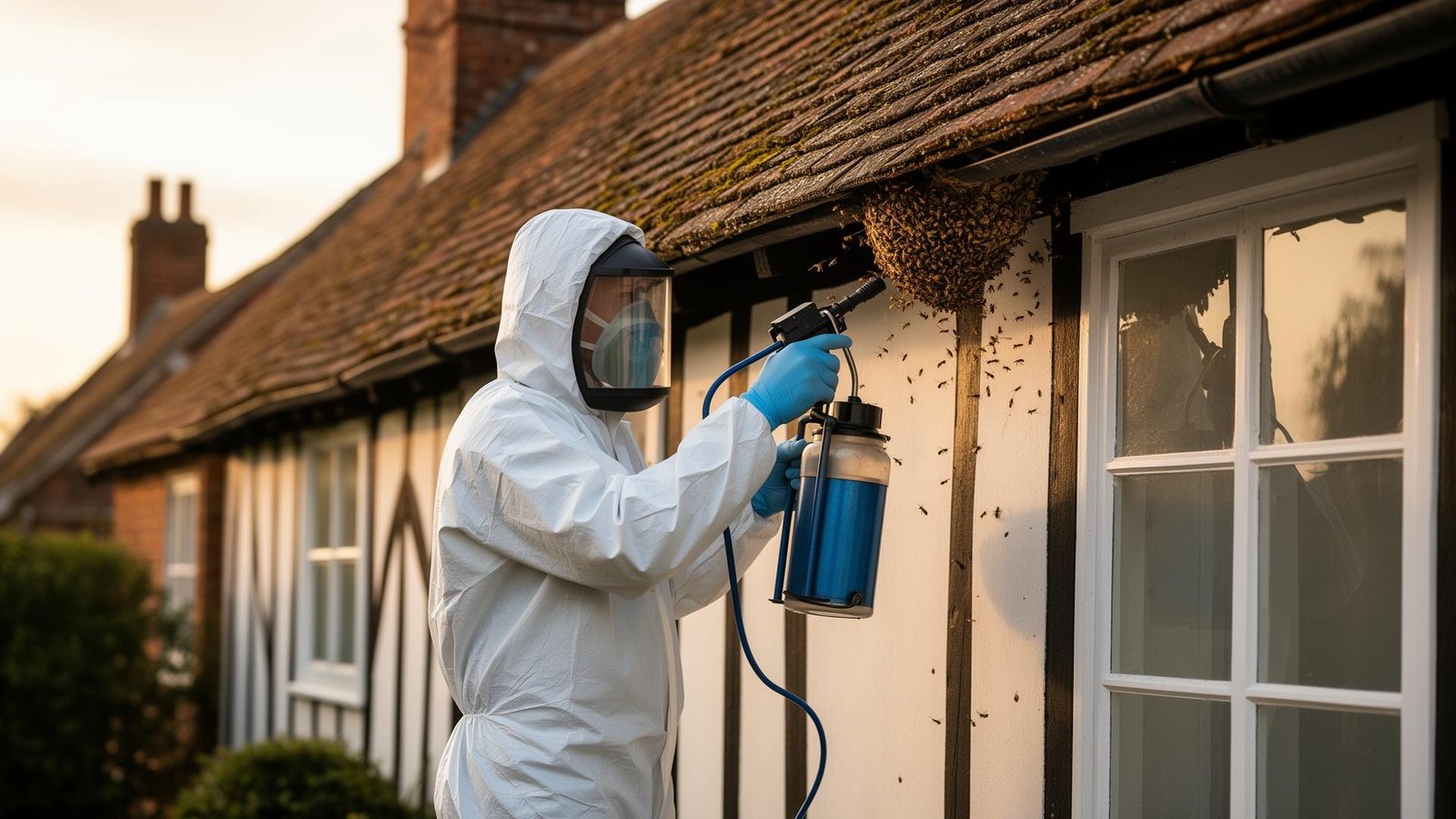
Supermarket aerosols can deal with a single wasp on a window. They are not designed to treat an active nest, and attempting to do so often makes the colony defensive and harder to treat. If you have an established nest, the safest approach is to have it treated properly.
Found a wasp nest? We can usually treat it the same day.
Fixed price £99. No VAT. Full guarantee. Open 8am–9pm across St Albans and Hertfordshire.