Common wasp (Vespula vulgaris)
By far the most frequent call-out in Hertfordshire. Yellow and black, around 12–17mm. Builds large papery nests in lofts, sheds, wall cavities and underground.
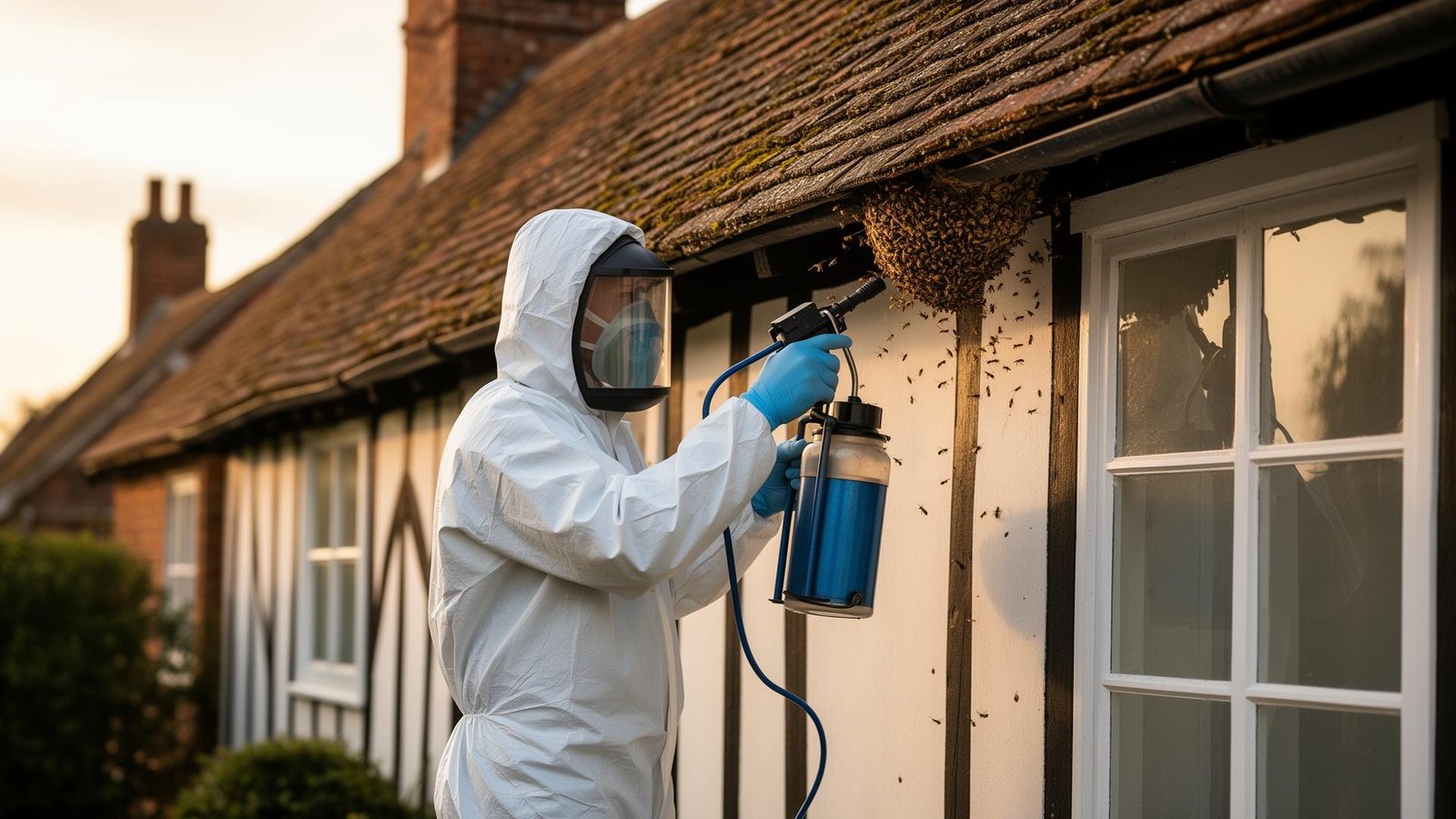
A short guide to the wasps and hornets we treat most often across St Albans and Hertfordshire.
Open 8am – 9pm, 7 days a week. Send a photo of the nest on WhatsApp for the fastest response.
By far the most frequent call-out in Hertfordshire. Yellow and black, around 12–17mm. Builds large papery nests in lofts, sheds, wall cavities and underground.
Very similar in appearance to the common wasp. Often nests in similar locations. Treatment is the same.
Slightly smaller, with longer legs. Often builds nests hanging from tree branches, hedges or under eaves. Active earlier in the year than the common wasp.
Larger than a common wasp, up to 35mm, with a reddish-brown and yellow body. Builds papery nests in tree hollows, lofts and outbuildings. Generally less aggressive than common wasps but the sting is more painful.
Not yet established in the UK but reported sightings should be recorded. Smaller than the European hornet, with a dark body, yellow leg tips and an orange face. If you think you have seen one, report it to the UK authorities via the Asian Hornet Watch app and call us — we can attend and confirm.
We do not treat honey bee or bumblebee colonies as a matter of course. Where possible we will refer honey bee swarms to a local beekeeper. Bumblebees are short-lived and usually best left alone.
Take a photo from a safe distance and email it to us, or call and describe what you're seeing. We'll tell you whether it's a wasp, hornet or bee, and what to do next.
Fixed price £99. No VAT. Full guarantee. Open 8am–9pm across St Albans and Hertfordshire.